Decision guides · Swiss hotel management
IMI bachelor’s, MSc or Graduate Diploma: which programme fits your next step?
| **By James Liu | Lux Education Partners | Reviewed 25 September 2026** |
IMI offers three bachelor’s routes, one MSc and two Graduate Diplomas. The first distinction is the qualification you need: a full undergraduate degree, a master’s degree or concentrated professional training.
Similar names can conceal very different courses. Hospitality operations and a professional kitchen involve different daily work. For a graduate, choosing a Graduate Diploma when the objective is a master’s would also mean choosing the wrong qualification.
The programme map
| Programme | Main focus | Study structure and intakes |
|---|---|---|
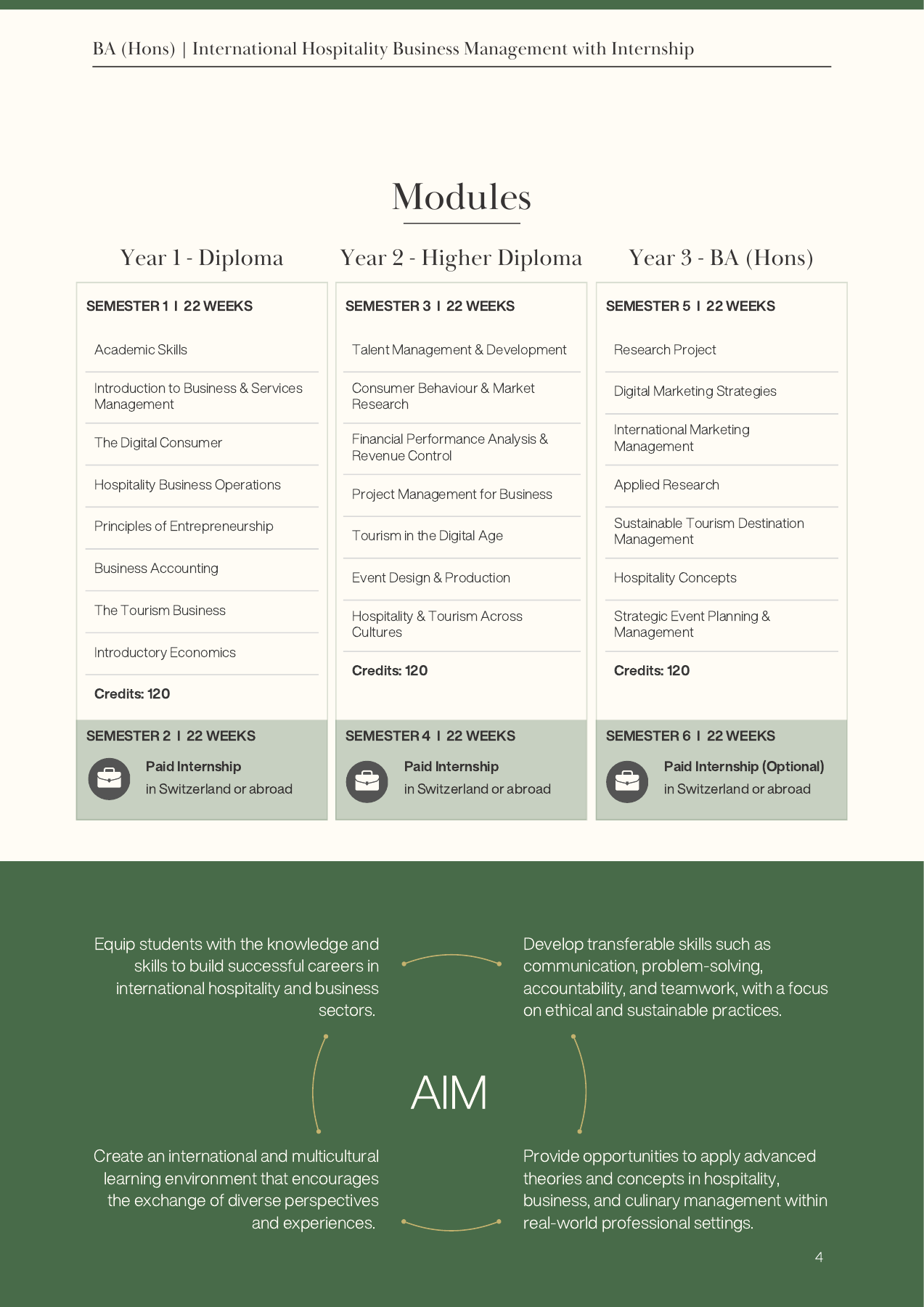
| BA (Hons) International Hospitality Business Management with Internship | Operations, revenue, people, marketing, tourism and events | Three 22-week study periods and two compulsory 22-week internships; February, May, August, November |
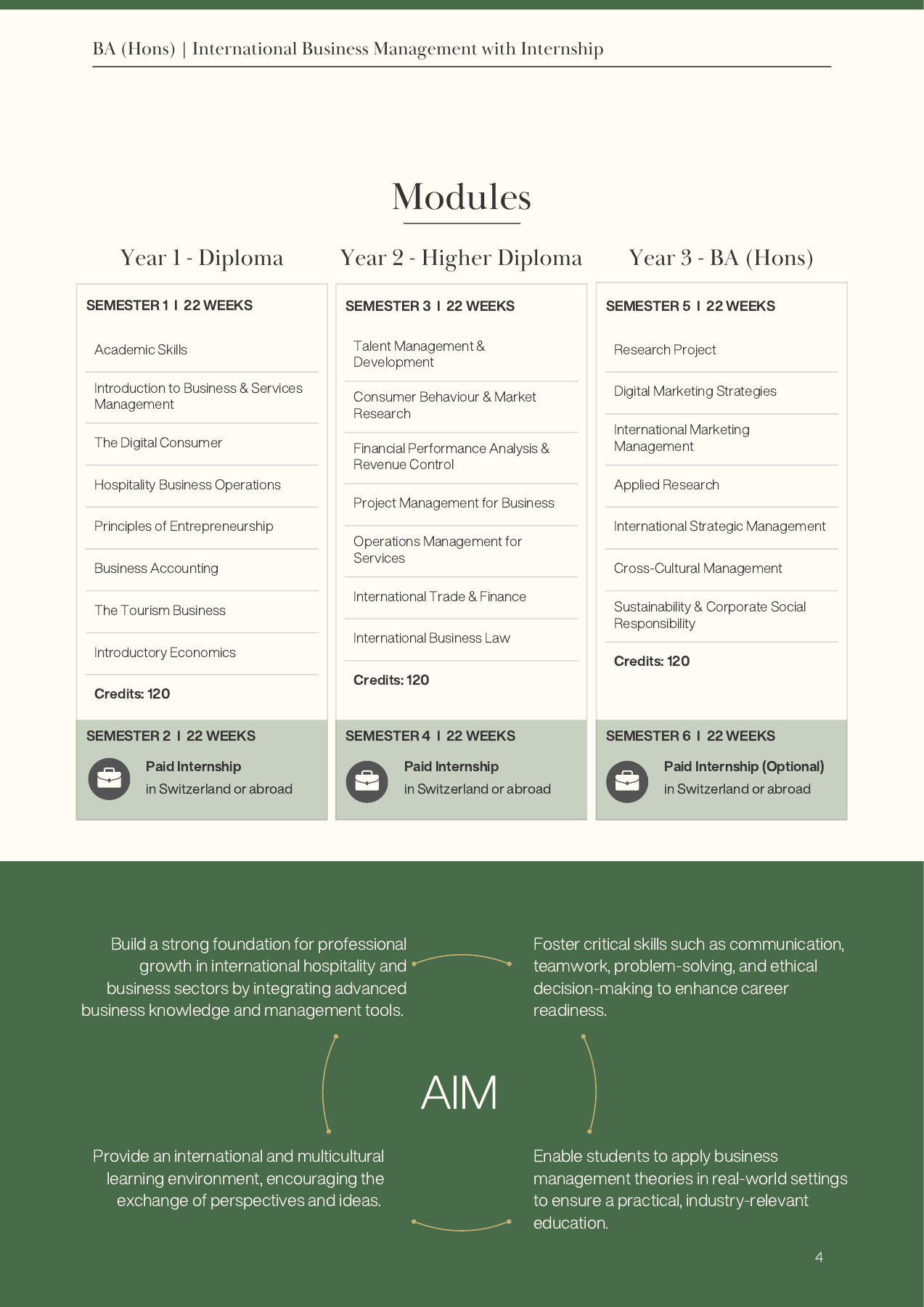
| BA (Hons) International Business Management with Internship | Business, international trade and finance, law, strategy and intercultural management | Same study and internship structure; February, May, August, November |
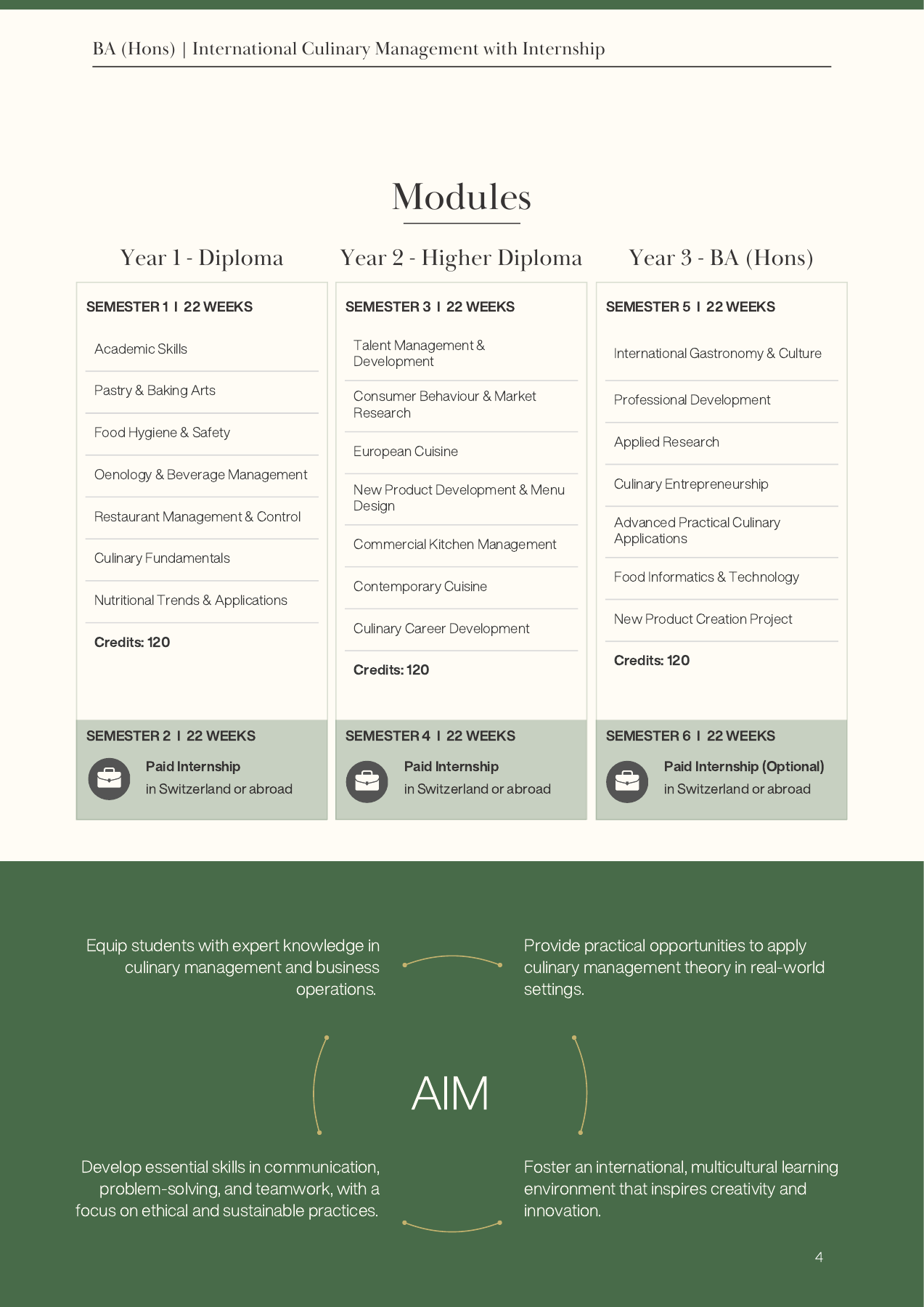
| BA (Hons) International Culinary Management with Internship | Culinary practice, kitchen management, menus and food businesses | Same study and internship structure; February and August |
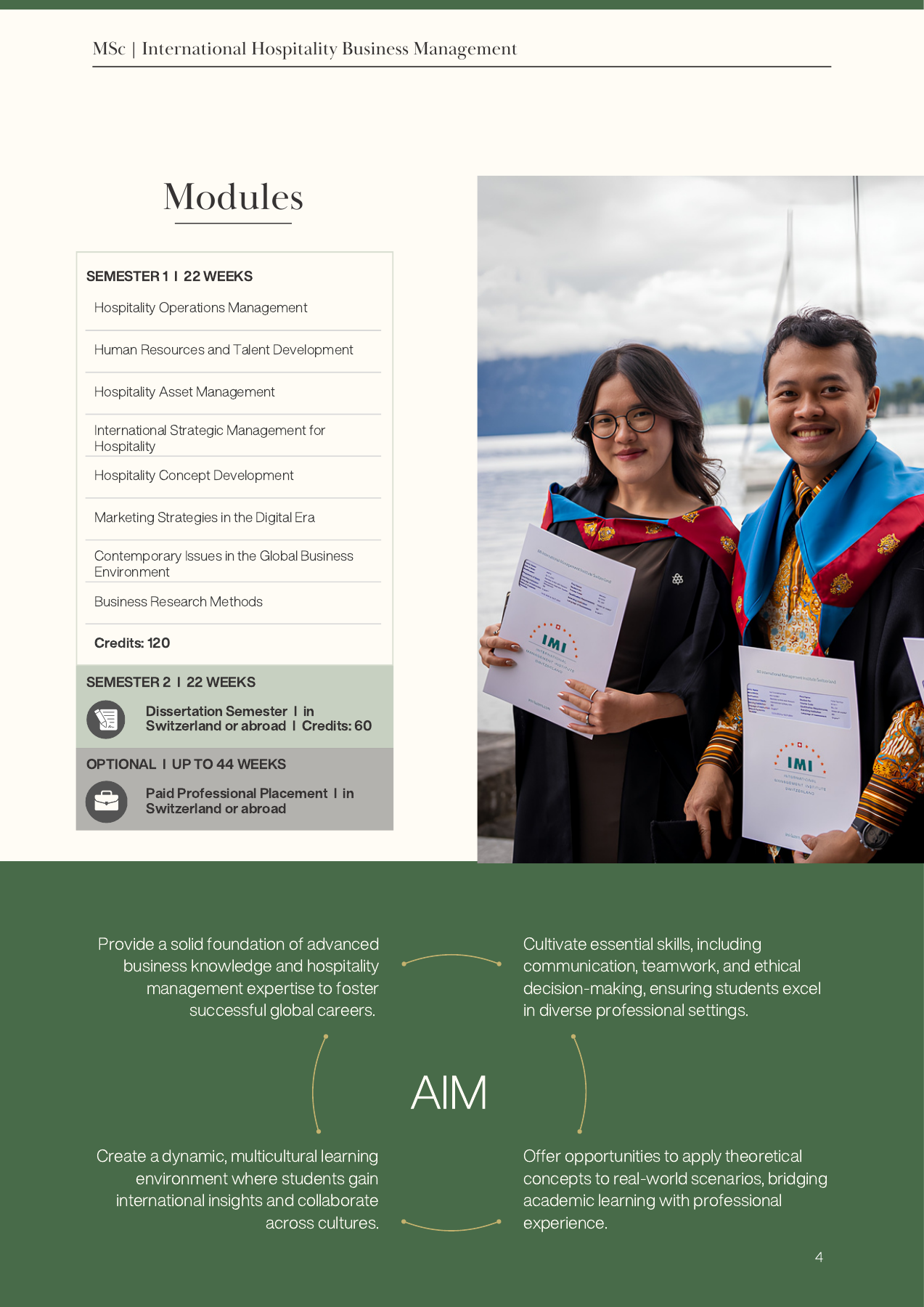
| MSc International Hospitality Business Management | Operations, assets, strategy, people and research | 22 weeks of teaching plus 22 weeks of dissertation work; February |
| Graduate Diploma in International Hospitality Management | Hospitality service and business foundations | 22 weeks of study; February, May, August, November |
| Graduate Diploma in International Culinary Arts | Culinary and restaurant foundations | 22 weeks of study; February and August |
All three bachelor’s routes also list an optional third 22-week internship. Brochures describe a 2.5–3-year route. The MSc brochure lists up to 44 weeks of optional professional practice, and each Graduate Diploma lists an optional 22-week internship. The selected intake must correspond to the chosen course.
Hospitality business: how does a hotel work as a business?
The first stage of the BA (Hons) International Hospitality Business Management with Internship includes accounting, economics, entrepreneurship and operations. Later stages introduce consumer research, financial performance, revenue control, people and projects, followed by marketing, research, tourism destinations and events.
The questions are practical: what should a room cost, how do you control expenses, why do guests return and how do you improve a team? For a student aiming to progress from operational experience towards management, these subjects have a clear purpose.
International business: a broader commercial focus
The BA (Hons) International Business Management with Internship shares the initial foundations of the hospitality route before adding international trade and finance, international business law, strategy, intercultural management and corporate social responsibility.
It deserves consideration when a student is more interested in markets and cross-border business than a specific hotel role. It still includes service and hospitality foundations; the word “Business” does not make it identical to every general business degree.
Culinary management: professional cooking and a food business
The BA (Hons) International Culinary Management with Internship includes culinary practice, baking, food safety, European cuisines, menu development and commercial kitchen management, alongside consumer research, food entrepreneurship and research projects.
Enjoying food is different from wanting to train in a kitchen. I discuss willingness to practise, follow standards and work in a team. Someone who hopes to run a restaurant also needs to understand costing, purchasing, service efficiency and staffing.
Already have a bachelor’s and want a master’s? Consider the MSc
Current materials for the MSc International Hospitality Business Management accept a bachelor’s in any discipline and indicate English at IELTS 6.0 or equivalent.
Subjects include hospitality operations, talent development, assets, international strategy, concept development, digital marketing, global business issues and research methods, followed by a dissertation. The emphasis is on analysis, business judgment and independent research.
A Graduate Diploma is not an MSc
The two Graduate Diplomas, awarded by IMI, provide approximately six months of concentrated sector study. Hospitality covers service, accounting, people, market research and projects. Culinary study covers food safety, practical cooking, restaurant control, baking and beverages.
Current materials list a bachelor’s degree or at least three years of work experience, with English at IELTS 5.0 or equivalent. A working adult moving into food service may need something quite different from a recent graduate seeking a master’s. We clarify the qualification, duration and purpose together.
Is a preparatory Certificate necessary?
The Certificate in International Hotel & Tourism Management is a 22-week pre-bachelor’s foundation covering academic English, study skills, hospitality, tourism and food service. Successful completion can lead into an IMI bachelor’s.
It is not automatically required for everyone. We assess the student’s actual school-leaving qualification—whether IB, A-levels or another national qualification—and English preparation with the school.
Degree arrangements and further study
IMI’s current detailed bachelor’s and MSc pages describe validation by Manchester Metropolitan University. The Graduate Diplomas are IMI qualifications. For the selected cohort, we confirm the qualification title and awarding arrangements in the admission documentation.
For further study, the receiving university’s requirements matter. For use in another country, recognition should be considered in that country and for the intended purpose. Chinese overseas qualification verification is a specific consideration for people who need it in China, not a universal requirement for all international readers.
How we make the recommendation
If the family has a restaurant, hotel or service business, I ask how the student may use the learning there. If the goal is employment in Europe, we examine languages, placements, employers and the student’s actual work rights in the target country.
The Yushufang Family Decision Framework helps connect strengths, budget and future plans. LEP’s formal IMI partnership supports direct course and scholarship discussions. Our local business network adds an employer perspective and supports suitable graduate introductions.
Tell us your qualification, English level, interests and budget. We will explain which course we recommend, why it fits and how we can take the application forward.
Explore IMI programmes, costs and applications
- Why study hospitality management in Switzerland? Start with what you want to do afterwards
- Why choose IMI Switzerland? Curriculum, internships and value matter more to me than luxury facilities
- What does IMI Switzerland cost? Tuition, scholarships, living costs and internship income
- IMI internships and graduate careers: experience matters, and so does the person willing to recommend you
- Applying to IMI Switzerland? LEP can handle programme selection, scholarships and the application with you
- What I look for when visiting IMI: the student’s future beyond the campus
- IMI Winter Programme 2027: CHF 1,800 early fee and a possible credit towards later tuition
If you are facing this decision, let's talk. contact@luxedupartners.lu →