Decision guides · Swiss hotel management
Why study hospitality management in Switzerland? Start with what you want to do afterwards
| **By James Liu | Lux Education Partners | Reviewed 25 September 2026** |
My view is that Swiss hospitality education deserves serious consideration for students who enjoy working with people, organising things and understanding how a business works. Their strengths deserve a route that develops them into professional ability.
I operate businesses in Europe, visit schools and interview students. When I look at education, I ask where the learning will be useful, who will recognise the graduate’s abilities and whether the investment gives the student more choices.
What does hospitality management actually teach?
The name may suggest reception desks, restaurants and guest rooms. The curriculum also includes accounting, marketing, revenue management, people management and projects.
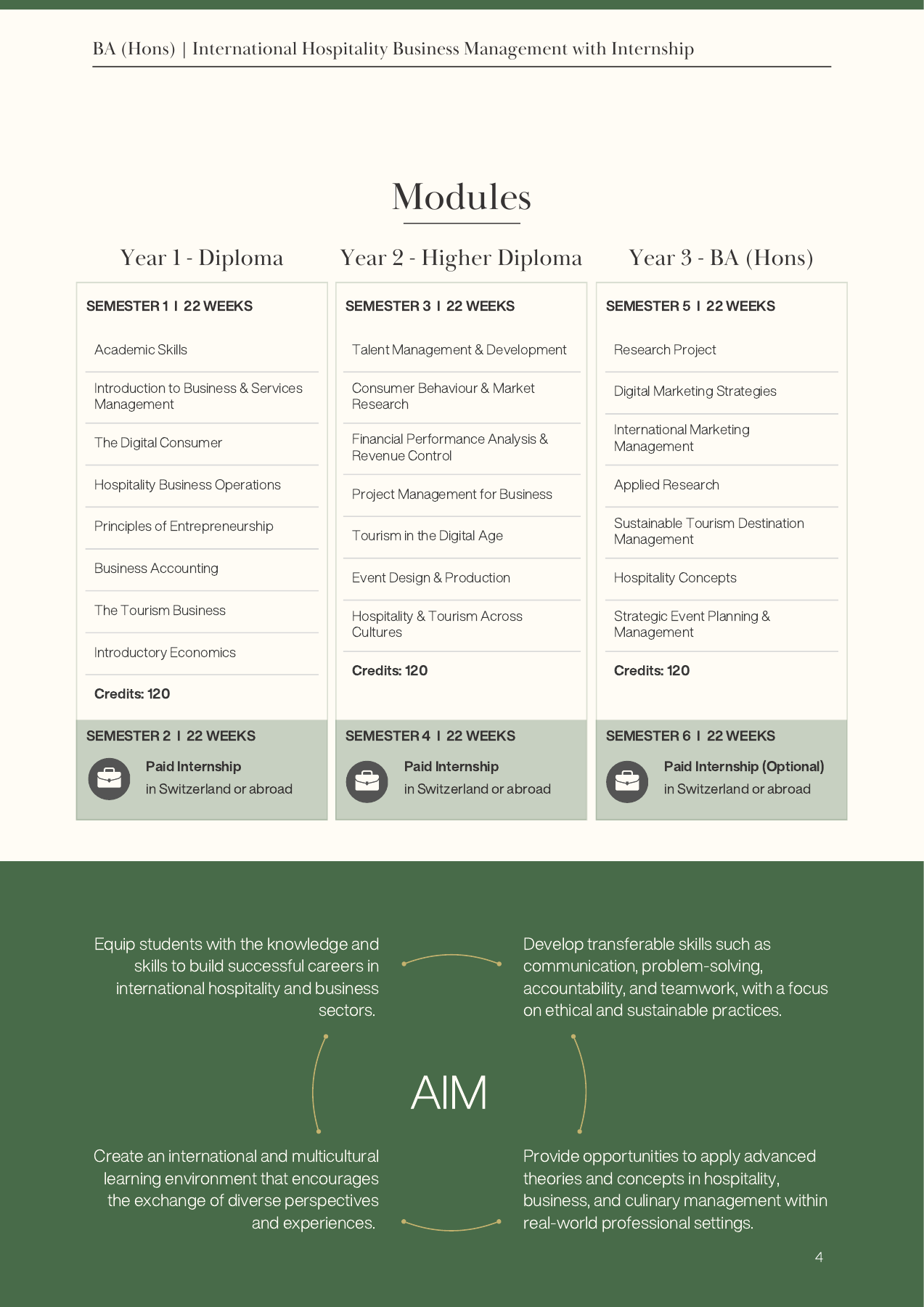
At IMI, the hospitality business bachelor’s moves from operations and business accounting into consumer research, financial performance, revenue control, marketing, research and events. A hotel makes business questions tangible: why customers pay, how prices are set, how teams work and what happens when service goes wrong.
Learning cost control before working in a restaurant gives a student a different perspective on the same job. The value lies in connecting knowledge with experience.
Why I value the ability to work with people
My personal judgment is that connections in the physical world will become more valuable: the ability to understand people, earn trust and take responsibility deserves greater attention as machines handle more information.
Software can help analyse a problem. Someone still has to hear a worried customer, organise a team and resolve a difficult situation. Hospitality, events and service businesses give young people repeated opportunities to develop those abilities, alongside languages, finance and analytical skills.
This should not be treated simply as a fallback for students with weaker exam results. Organising an event, noticing others’ needs and staying calm under pressure are useful strengths. They need training and discipline to become a career.
Why Switzerland?
The attraction is how particular schools combine business teaching, practical training and industry experience. IMI’s bachelor’s brochures show three 22-week study periods, two compulsory 22-week paid internships and an optional third internship. Returning to class after working can help a student understand what they need to improve.
English-medium teaching and international classmates also create opportunities to work across cultures. Schools differ substantially in curriculum, internships and cost, so the country is the starting point; the specific programme is the decision.
| What the student hopes to do | What I examine first |
|---|---|
| Work in hotels, events or tourism | Operations, revenue management, projects and placements |
| Explore business before choosing a sector | Breadth of business teaching and room to explore through internships |
| Build a culinary or restaurant career | Kitchen training, menu costing, restaurant management and entrepreneurship |
| Join a family business | Which operating problems the course and placements can help solve |
| Continue to a master’s | Qualification, grades, research preparation and the target programme’s requirements |
A family restaurant, hotel, retail or service business can give the student somewhere concrete to use the learning. Students without a family business can build the same professional foundations, but gaining experience and relationships early becomes especially important.
Which schools does LEP work with?
Our Swiss hospitality partners include IMI International Management Institute Switzerland and the four schools within Swiss Education Group (SEG):
| School | Also known as |
|---|---|
| Swiss Hotel Management School | SHMS |
| César Ritz Colleges Switzerland | César Ritz |
| HIM Business School | Formerly Hotel Institute Montreux |
| Culinary Arts Academy Switzerland | CAA |
We select partners carefully, focusing on institutions we consider leaders in their specific areas. Value, academic demands and preparation for employment carry different weights for different families. Every recommendation should have a reason tied to the student.
Budget, employment and residence belong in the same discussion
I see value in IMI’s combination of teaching, partner benefits and paid internships. A useful budget includes scholarships, campus accommodation and meals, placement earnings and placement living costs. It also shows when the family needs the money: wages received later cannot fund a fee due now.
For students hoping to work in Europe, planning depends on their nationality, existing residence rights, language skills and destination. A Swiss education is not itself permission to work throughout Europe. We consider those questions alongside the choice of programme.
My base is Luxembourg, with business relationships in Switzerland, the Netherlands, Ireland and Austria. I look at the markets a student may eventually enter, rather than limiting the discussion to one campus or country.
Why involve LEP?
Our Yushufang Family Decision Framework connects the student’s strengths, family budget and longer-term plans. Formal school relationships help us progress applications and pursue applicable scholarships. Our European business relationships also matter after admission.
We share our established local network with families who work with us. Graduate employment recommendations are an important part of that work. Schools need good students; businesses need suitable people. We first select and match students to countries and schools, help them develop, then introduce well-prepared candidates where their abilities fit.
Tell us the student’s current qualification or school stage, interests, budget and preferred future destination. We can then discuss whether Swiss hospitality education is a worthwhile route.
Explore IMI programmes, costs and applications
- Why choose IMI Switzerland? Curriculum, internships and value matter more to me than luxury facilities
- IMI bachelor’s, MSc or Graduate Diploma: which programme fits your next step?
- What does IMI Switzerland cost? Tuition, scholarships, living costs and internship income
- IMI internships and graduate careers: experience matters, and so does the person willing to recommend you
- Applying to IMI Switzerland? LEP can handle programme selection, scholarships and the application with you
- What I look for when visiting IMI: the student’s future beyond the campus
- IMI Winter Programme 2027: CHF 1,800 early fee and a possible credit towards later tuition
If you are facing this decision, let's talk. contact@luxedupartners.lu →