Decision guides · Swiss hotel management
What I look for when visiting IMI: the student’s future beyond the campus
| **By James Liu | Lux Education Partners | Reviewed 25 September 2026** |
When I visit IMI, I look at more than the grounds: how students learn, how they communicate and which young people this school could give a useful start.
From my visit, I would not describe IMI’s facilities as luxurious. Families need to decide how they weigh the physical environment against teaching, placements and an affordable plan. Different students will reach different conclusions.

I visit as both a parent and a business owner
I live and operate businesses in Luxembourg, where my own child attends an international school. As a parent, I understand concerns about settling in, choosing the wrong route or paying for education without knowing what comes next. As a business owner, I look at communication, the ability to get things done and whether someone earns trust.
At IMI, that means examining accounting, revenue control, people and project management. For placements, I want to understand the work students actually do, how supervisors assess them and how that experience helps the next step.
My assessment: curriculum, practice and value
IMI has strengths I can describe concretely: three bachelor’s directions, alternating study and paid internships, and the possibility of applying for an MSc at IMI or elsewhere afterwards.
Applicable partner benefits and scholarships affect the family’s final cost. Placements can bring wages as well as experience. Together, these make IMI worth comparing on value.
I also tell families about the facilities as I saw them. A student who accepts a relatively modest physical setting and values the teaching and practical structure may find a good fit. The choice should be made with a clear picture of both.
Student interviews should reveal actual experiences
I have interviewed students at IMI and kept video and photographs. When reviewing that material, families should listen for specific experiences rather than simply “the school is good”.
| Question to consider | Why it matters |
|---|---|
| Which class was hardest, and why? | Helps relate academic demands to the student’s preparation |
| What did the first internship involve? | Turns “paid internship” into an actual working experience |
| What was difficult on arrival? | Helps prepare for language, independence and everyday changes |
| How did career plans change? | Shows how experience influenced the next decision |
These are questions I suggest using to assess an interview, not invented answers attributed to students. When the interviews are published, I will retain their context so that families can hear the students themselves.
The relationship behind a photograph matters
My judgment is clear: ordinary agencies can only reach admissions officers; becoming part of Europe’s education circles gives you direct dialogue with school heads and owners, in-depth interviews and ongoing access whenever you need to get in touch. This is what I can do, and it is an important difference between LEP and ordinary agencies.
In our school-level work, I have deep relationships with the heads of St George’s International School in Luxembourg and Chantemerle, ISA Altdorf and St. Charles in Switzerland. Those conversations help me understand their educational approach and discuss how a child can use the school’s learning and progression resources.
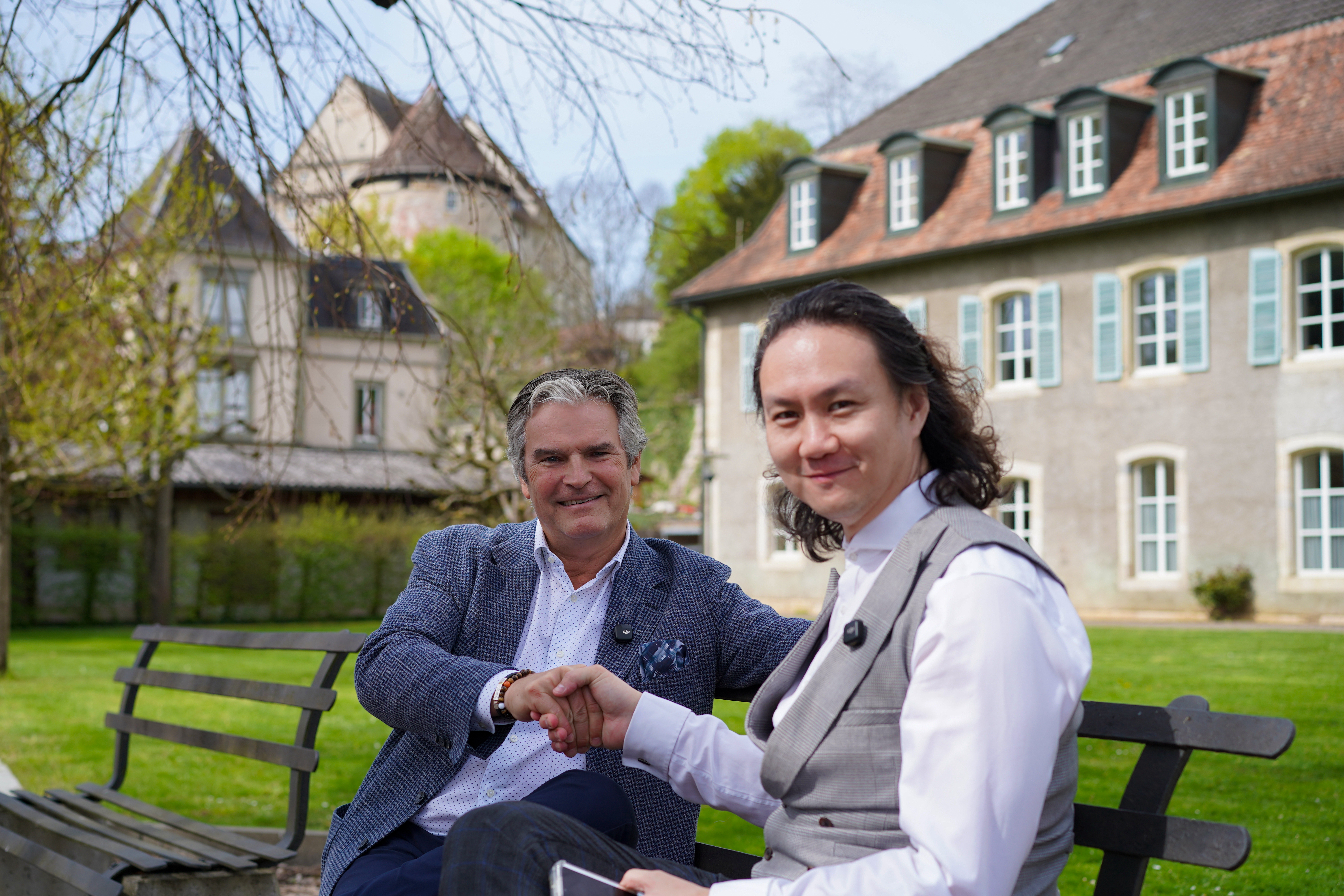
For IMI, we have a formal partnership and direct contact with the admissions team on courses and applications. The specific contact differs by school. The underlying approach is consistent: build trust through ongoing cooperation and know whom to reach when a family needs something progressed.
Why a guide cannot replace local relationships
In Luxembourg, Switzerland and the Netherlands, reputation influences whether others continue to cooperate with you. The people you recommend and the way you handle commitments matter.
I meet and work with local schools and businesses repeatedly. When action is needed, I can respond locally; when an introduction is appropriate, there are people willing to listen. Those resources take time to develop.
We share our network with families who work with LEP. Schools want good students, employers want suitable talent and we want students whose achievements both can recognise. We first select and match students to countries and schools, then help them prepare and grow. That makes the cooperation sustainable.
Is IMI right for your child?
We begin with interest in business and service, readiness to study in English and willingness to learn through operational work. Then we examine the course, budget and next educational or professional step.
A family business creates one set of opportunities. A European employment goal calls for languages, placements, employer introductions and appropriate work rights. A student still exploring may benefit from a short programme first.
The Yushufang Family Decision Framework connects strengths and potential with family circumstances and country choices. I want to give families a recommendation with reasons and practical next steps: why this route fits, where to begin and how to continue.
Explore IMI programmes, costs and applications
- Why study hospitality management in Switzerland? Start with what you want to do afterwards
- Why choose IMI Switzerland? Curriculum, internships and value matter more to me than luxury facilities
- IMI bachelor’s, MSc or Graduate Diploma: which programme fits your next step?
- What does IMI Switzerland cost? Tuition, scholarships, living costs and internship income
- IMI internships and graduate careers: experience matters, and so does the person willing to recommend you
- Applying to IMI Switzerland? LEP can handle programme selection, scholarships and the application with you
- IMI Winter Programme 2027: CHF 1,800 early fee and a possible credit towards later tuition
If you are facing this decision, let's talk. contact@luxedupartners.lu →