
The family paid the initial engagement fee on 7 September; the school scheduled the child’s start for 16 September. In those nine days, LEP coordinated school leadership, trial attendance, an offer and the arrangements between the school, parents and an existing host family.
Why nine days mattered
In my planning experience, families should allow around two months for an ordinary application, before adding time for host-family matching. European office schedules and summer closures make last-minute coordination difficult. This was an exceptional temporary placement after the school term had started.
The first enquiry on 21 August was unpaid, during the summer break. The nine-day period starts with paid engagement on 7 September. This was a case within the EU; it did not include obtaining an entry visa from China or another non-EU country.
Direct access to the principal
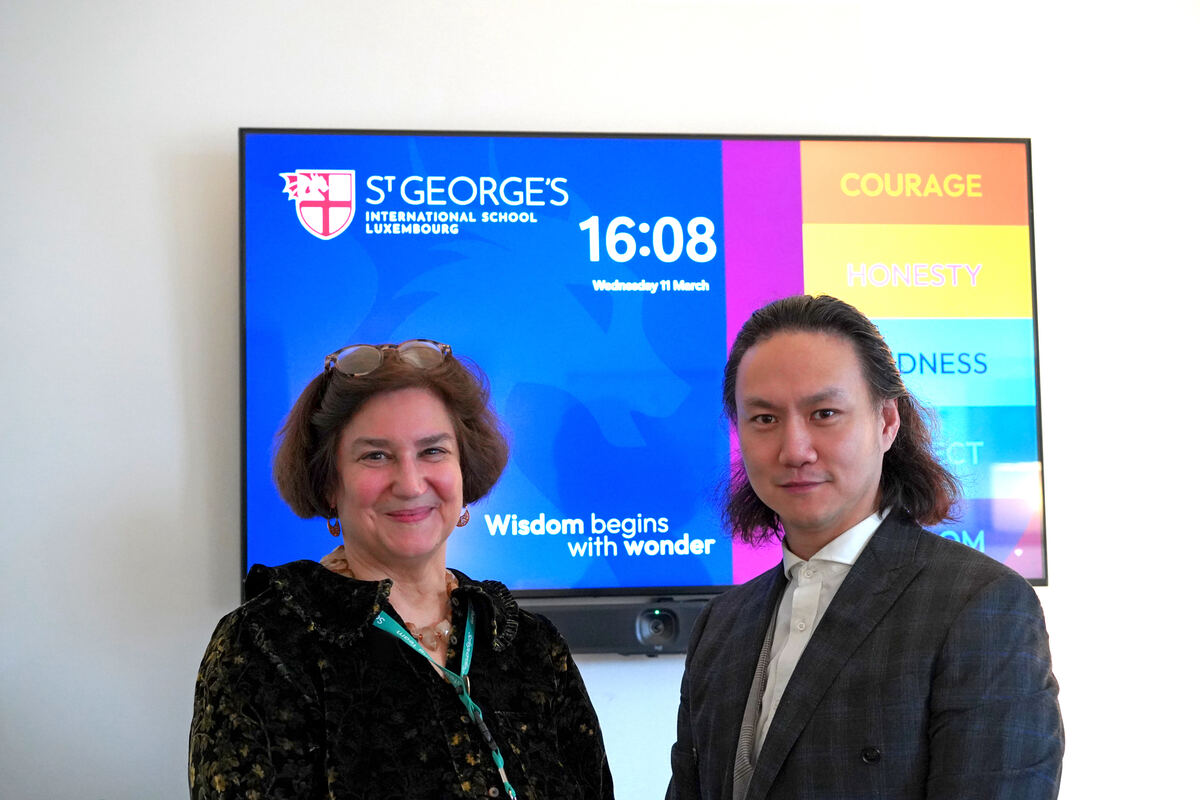
On 7 September I contacted the principal, who replied in about two hours and involved the secondary head. She examined whether the child’s previous curriculum made a different year placement more suitable than a simple age or grade conversion. The principal oversees the school, with separate primary and secondary heads; the secondary staff then handled the relevant teaching arrangements.
I pressed for an offer; the school insisted on assessment
On 9 September, the secondary head explained that admissions followed specific procedures. After the trial days, I asked on 11 September whether a decision could be given that day. The admissions lead replied that teachers’ feedback had to be gathered and discussed collectively on Monday. She could not issue a final decision that afternoon.
The school also required clarity about parental decision-making, the host family, correspondence and emergency contacts. Urgency and direct relationships did not remove these requirements. My role was to provide what the school needed promptly so it could make a considered decision.
The sequence
| Date | What happened |
|---|---|
| 7 September | Paid engagement; direct principal contact and same-day response. |
| 8 September | The principal proposed trial attendance on 10 and 11 September. |
| 10 September | I accompanied the child to local education appointments and the school. The family reported that the child was very happy and wanted to attend. |
| 11 September | Second trial day; the school required collective review and further local-arrangement documents. I coordinated the documents that evening. |
| 14 September | Formal offer issued and parental acceptance coordinated. |
| 15 September, 08:50 | I accompanied the host family to the school meeting. |
| 16 September | Start date confirmed by the school and family. |
The host family and school had to work together
The parents had already found a host family through their own contacts. LEP did not find that family in nine days. We clarified parental authority, everyday responsibilities, school communication and local emergency contacts, and accompanied the meeting. Accommodation alone did not finish the practical work.
Standards and the child’s interests together
I recall contacting around five to seven schools during the search; some did not respond even though I understood that they had resumed office work. St George’s took the situation seriously and explained what remained to be done. Its 14 September offer explicitly sought continuity in the child’s education during the temporary stay.
This is why I value the school’s approach. The child urgently needed to resume learning, and the school worked with us while still completing its assessment. Local relationships, practical follow-through and the school’s professional cooperation all contributed.
The parent’s own words
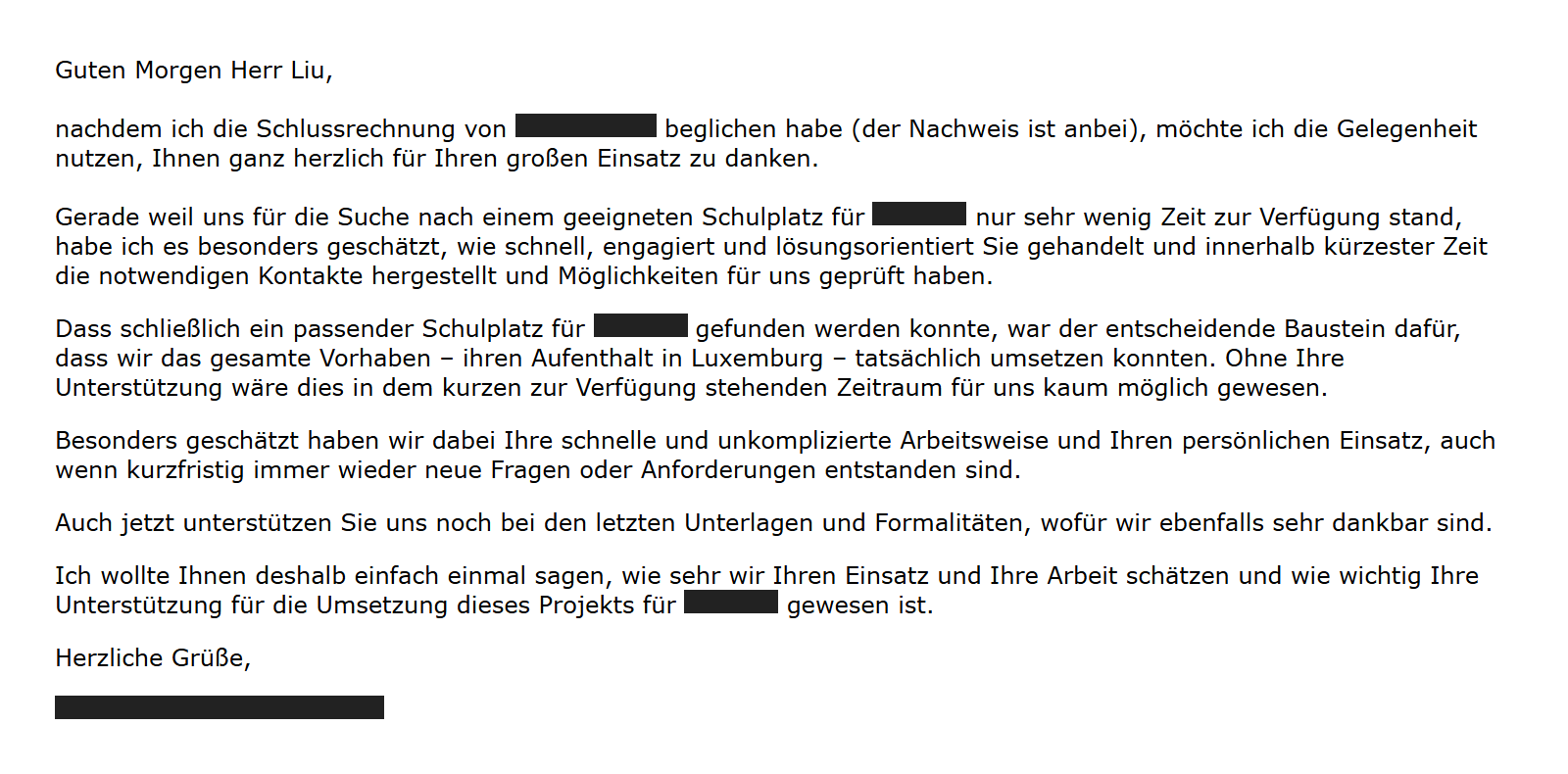
“Without your support, this would hardly have been possible for us in the short time available.”
This is an English translation of part of the original German thank-you email. The parent praised our speed, personal involvement, response to new requirements and continued help with the final paperwork.
A case of execution, not a nine-day promise
Please allow time for school availability, curriculum matching and a suitable host family. For families applying from China, my recommendation is to begin overall preparations at least four months ahead; that is planning advice, not a fixed visa-processing period. Other nationalities and residence situations require their own assessment.
LEP provides school coordination, host-family matching where needed and local follow-through. Luxembourg services are paid and the scope is agreed in advance.
Explore the related guides
- St George’s International School Luxembourg: British education, academic expectations and local support
- Studying in Luxembourg without parents: arranging the school and a host family
- Why choose LEP for a Luxembourg school application? Local relationships that lead to action
Luxembourg school and local host-family services are paid. We agree the work and fees before starting.
Discuss your European study plans with James Liu
Contact us in English, French or Chinese. Tell us the student’s current level of study, countries you are considering, intended start date and budget.