
| **By James Liu | Lux Education Partners | Reviewed 26 September 2026** |
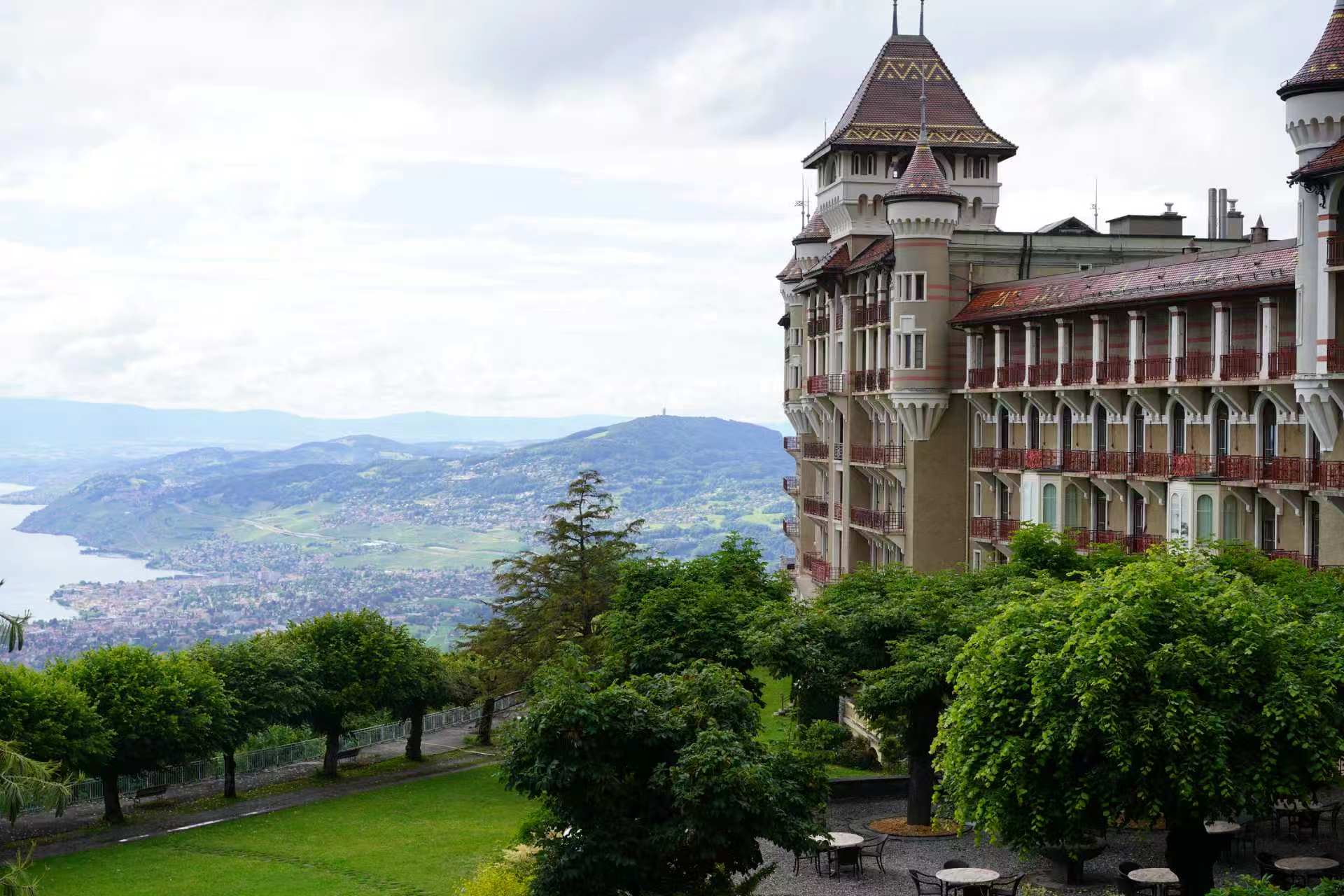
Two palace campuses, fourth place in the QS 2026 Hospitality & Leisure Management subject ranking, two international paid internships, and bachelor’s degrees from SHMS and the University of Derby: these are distinctive features of Swiss Hotel Management School (SHMS).
I have visited SHMS myself. For students interested in hotels, high-end service or events, I think it deserves serious consideration. Its design management pathway also connects an interest in space, aesthetics and customer experience with hospitality business.
One student wants to run a hotel, another enjoys organising events, and a third is drawn to interiors. SHMS offers three undergraduate directions that give those interests a practical focus.
Three pathways, three different interests
Hospitality, event and design management share foundations in hospitality and business before becoming more specialised. Students do not need to decide their entire career on arrival, but they should understand the differences.
| Undergraduate pathway | Examples of course content | What I discuss with a student |
|---|---|---|
| Hospitality Management | Rooms and food service, revenue management, hotel strategy, resort and spa operations | Willingness to learn through operations and balance guests, colleagues and costs |
| Event Management | Event concepts, project organisation, banqueting, planning and delivery | Interest in organising people and managing budgets, schedules and details |
| Design Management | Hotel and restaurant design, visual communication, AutoCAD and design innovation | Interest in spaces and guest experiences, and in turning aesthetics into workable operations |
Design management is easily misunderstood. It sits within hospitality and commercial spaces: an attractive lobby, restaurant or room must also work for guests and staff. This pathway is particularly relevant to students who want to connect design, business and service.
From serving guests and keeping accounts to understanding hotel profitability
Early study includes food and beverage theory and practice, cost control, wine, accounting, rooms operations, languages and professional preparation. Later subjects include data-informed decisions, people management, brand marketing, research and business planning.
Service training deserves to be taken seriously. Someone preparing to manage a team needs to understand what happens in housekeeping, restaurants and reception. Internships bring costs, service and staffing into focus; students can then return to class with real questions.
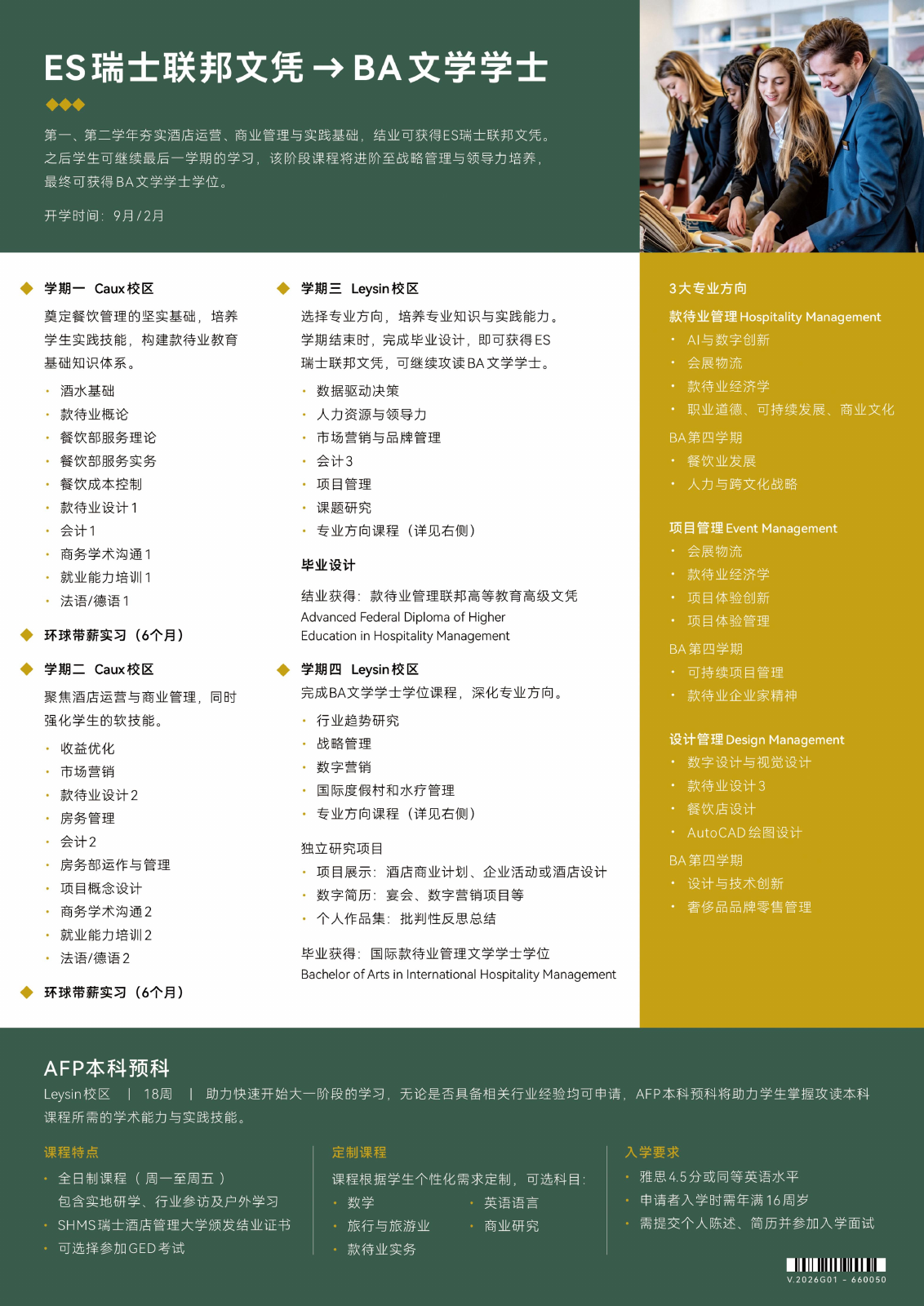
The 2.5–3-year route includes the ES professional diploma and progression to bachelor-level study. Families planning a full bachelor’s degree must include the final stage, rather than treating an intermediate diploma as the completed degree.
Which degrees and diplomas can students earn?
Students completing the corresponding programmes can earn the Swiss Advanced Federal Diploma of Higher Education in hospitality management, the relevant SHMS bachelor’s degree and a BA (Hons) from the University of Derby in the UK.
The ES diploma is a Swiss higher professional education diploma; a BA is a bachelor’s degree. The diploma and degrees correspond to different stages of study. If a student plans to continue to a master’s, we consider the awarding institution, results and the requirements of the intended postgraduate programme.
SHMS is fourth in the QS 2026 Hospitality & Leisure Management subject ranking. This is a subject ranking, not fourth place among universities overall. Rankings help families become familiar with a school; the curriculum and practical experience explain what a student can learn there.
Postgraduate options at SHMS
| Programme | Main focus | Structure to consider |
|---|---|---|
| MA in International Hospitality Business Management | Revenue and finance, marketing, people and hospitality business | Standard and accelerated routes have different periods of study on campus |
| MA in International Hospitality Business Management: Luxury Brand Management specialisation | Luxury brand strategy, consumers and experience | A specialisation within hospitality business |
| MSc in International Hospitality Management | Strategy, risk, technology, research and hotel management | Taught study followed by a project or dissertation, with an optional internship |
| Global MBA | Broader business management and leadership | Entry background and the selected intake need individual confirmation |
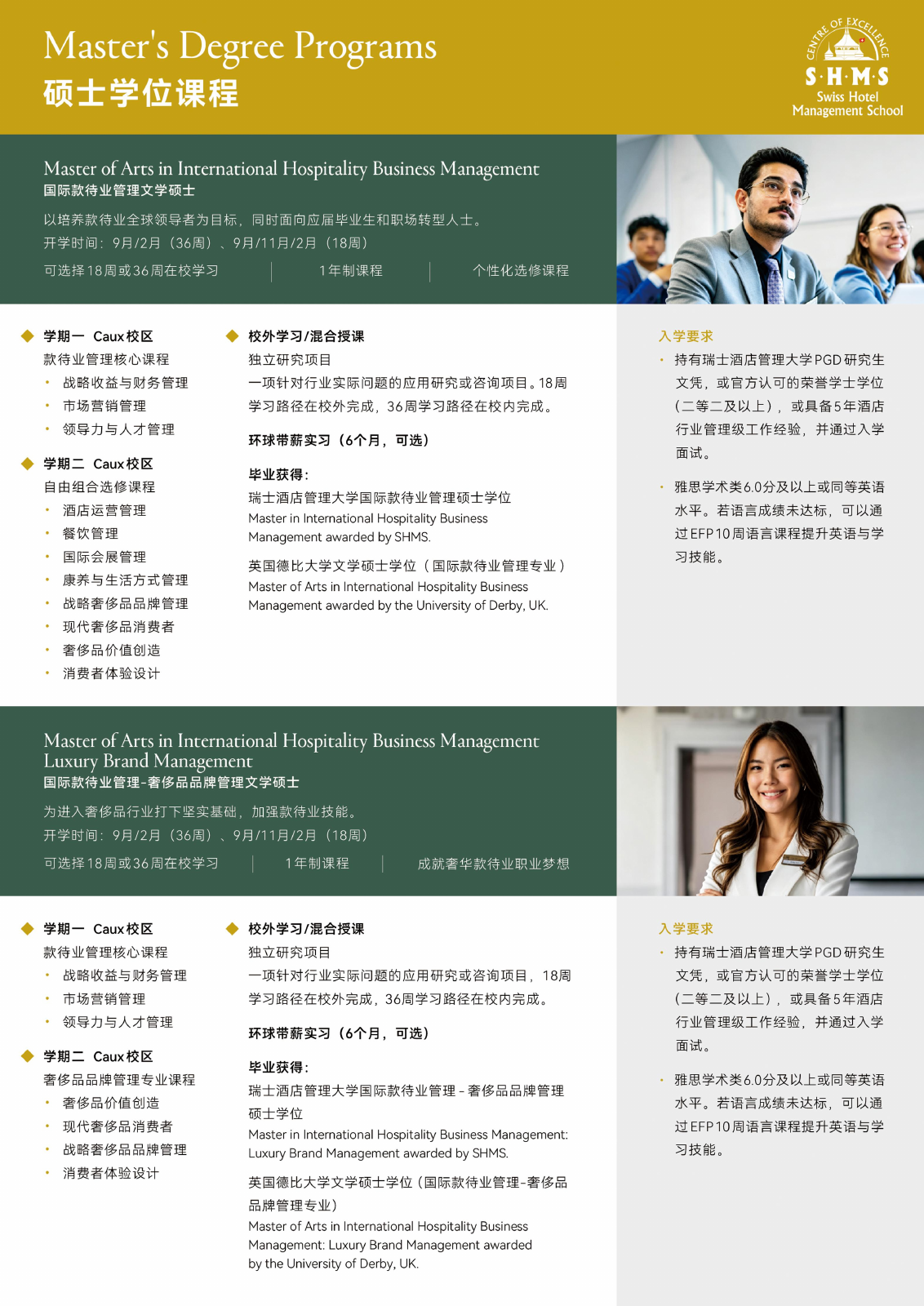
A person with practical experience who wants a stronger business foundation may need a different route from a recent graduate preparing for research-oriented study. LEP works directly with the school to connect programme choice, actual study time, practical experience and the final degree or diploma.
What does the 2027 undergraduate route cost?
The 2027 fee schedule lists CHF 186,500 for the full undergraduate route.
| Item | CHF |
|---|---|
| Tuition | 130,700 |
| Accommodation during the periods covered by the schedule | 14,800 |
| Meals during the periods covered by the schedule | 12,400 |
| Infrastructure and services | 28,600 |
| Total | 186,500 |
| Additional deposit | 2,000 |
These figures are before scholarships. Accommodation and meals cover the study periods specified in the schedule; holidays, living costs during internships and personal spending need separate provision. Families paying in another currency should budget using the exchange rate when payment is due.
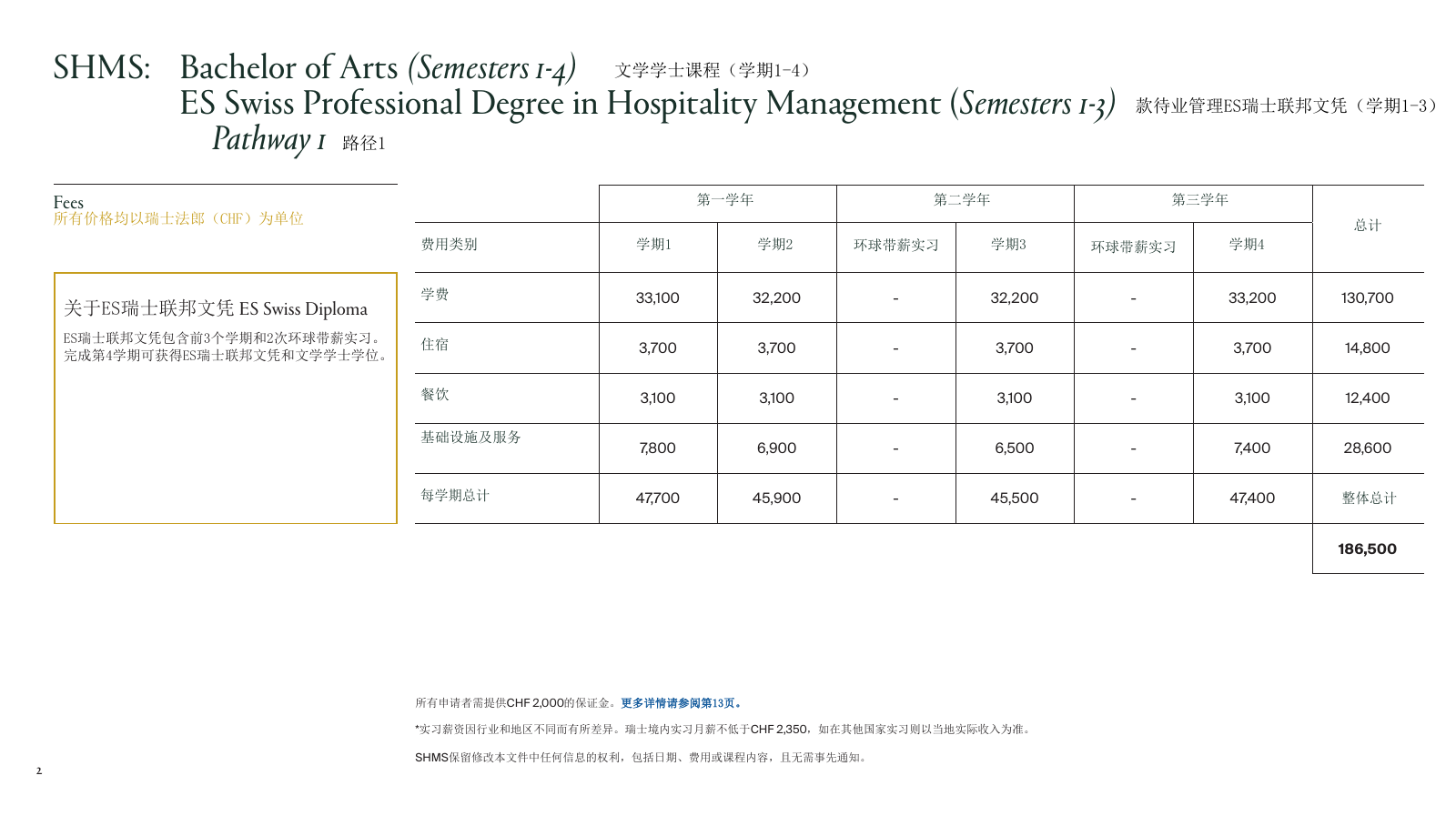
SHMS has a higher listed undergraduate cost within the four SEG schools. For a student committed to hotel operations, events or hospitality design, its setting, specialist pathways and practical training are worth comparing. I consider the student’s direction and the family’s budget, then work with the school on applicable scholarships.
Postgraduate fees depend on the selected programme and intake. Fees may vary; the final amount is confirmed by the school during the application.
How does LEP help a student make use of these opportunities?
LEP has a formal partnership with SHMS, as well as SEG’s other three schools—César Ritz Colleges Switzerland, HIM Business School and Culinary Arts Academy Switzerland—and IMI International Management Institute Switzerland. We compare actual programmes and help pursue applicable scholarships.
I run businesses in Europe and pay attention to the skills employers value. An aspiring hotel manager needs to build operational experience; someone aiming for events or brand experiences should develop relevant projects and work. Graduate employment recommendations, information from local businesses and long-standing professional relationships are central to our service.
Partner families can draw on the local networks we maintain. Schools need students who develop well; employers need suitable talent; we need students whom we can continue to recommend with confidence. That relationship grows through years of cooperation and reputation. It starts with careful student selection and a suitable match between the person, country and school.
Tell us about the student’s educational background, interests, budget and preferred countries for their future. LEP can handle programme selection, scholarship discussions and the application process.