
The start of term is not necessarily the end of admissions
Families often ask whether missing the start of the school year means waiting another year. It is usually still worth making an enquiry. International schools regularly encounter relocations and pupils arriving from another country.
St George’s explicitly accepts applications during the academic year, subject to space. ISL is also taking applications for the current school year. At OTR, we need to check the particular year, course progression and available places.
For applicants overseas, we normally begin by coordinating a remote assessment or interview. The school needs to understand English, subject knowledge and learning needs before deciding on admission and placement. Mid-year entry does not remove the assessment process.

Planning a September start
Once the family has a reasonably clear intention, start the discussion. Waiting until the summer holiday can leave too much to arrange at once.
| Family’s plan | A useful approach |
|---|---|
| September next year | Use the preceding autumn and winter to discuss schools, English and year placement, then follow each school’s application window |
| September this year, with spring already under way | Check places promptly, arrange assessments and progress the host family and administrative requirements in parallel |
| Entry after term has started | First establish whether the current year and curriculum can be matched, then agree a realistic starting date |
As a working planning estimate, allow around two months for an ordinary school application, excluding host-family matching. For a child applying from China who needs a visa, I generally advise leaving at least four months for the overall preparation. Language development, finding a host family or changing courses may require an earlier start.
That is practical planning advice, not a school processing promise or a statutory visa timetable. School holidays and periods when offices are closed also affect the pace.
Moving during the final two years needs particular care
At lower-secondary level, the discussion centres on language, placement and subject continuity. During the IB Diploma or A Levels, subject choices, coursework and examination schedules can make a transfer more difficult.
For example, ISL checks whether an applicant for the final IB year is already following the IB and whether their subjects can be matched. A pupil new to the IB cannot simply begin with its final year.
We therefore need more than a label such as “Grade 11”. The current curriculum, chosen subjects and progress within them determine whether an immediate move makes sense.
A free three-day trial at St George’s through LEP
St George’s has offered a free three-day trial to students working with LEP. It lets a child experience lessons, teachers and classmates while giving the school a more concrete understanding of the pupil.
I regard this as a meaningful opportunity to assess fit, particularly for a first move abroad. LEP coordinates the dates and arrangements. A trial does not replace the admission decision.
What made our nine-day case possible?
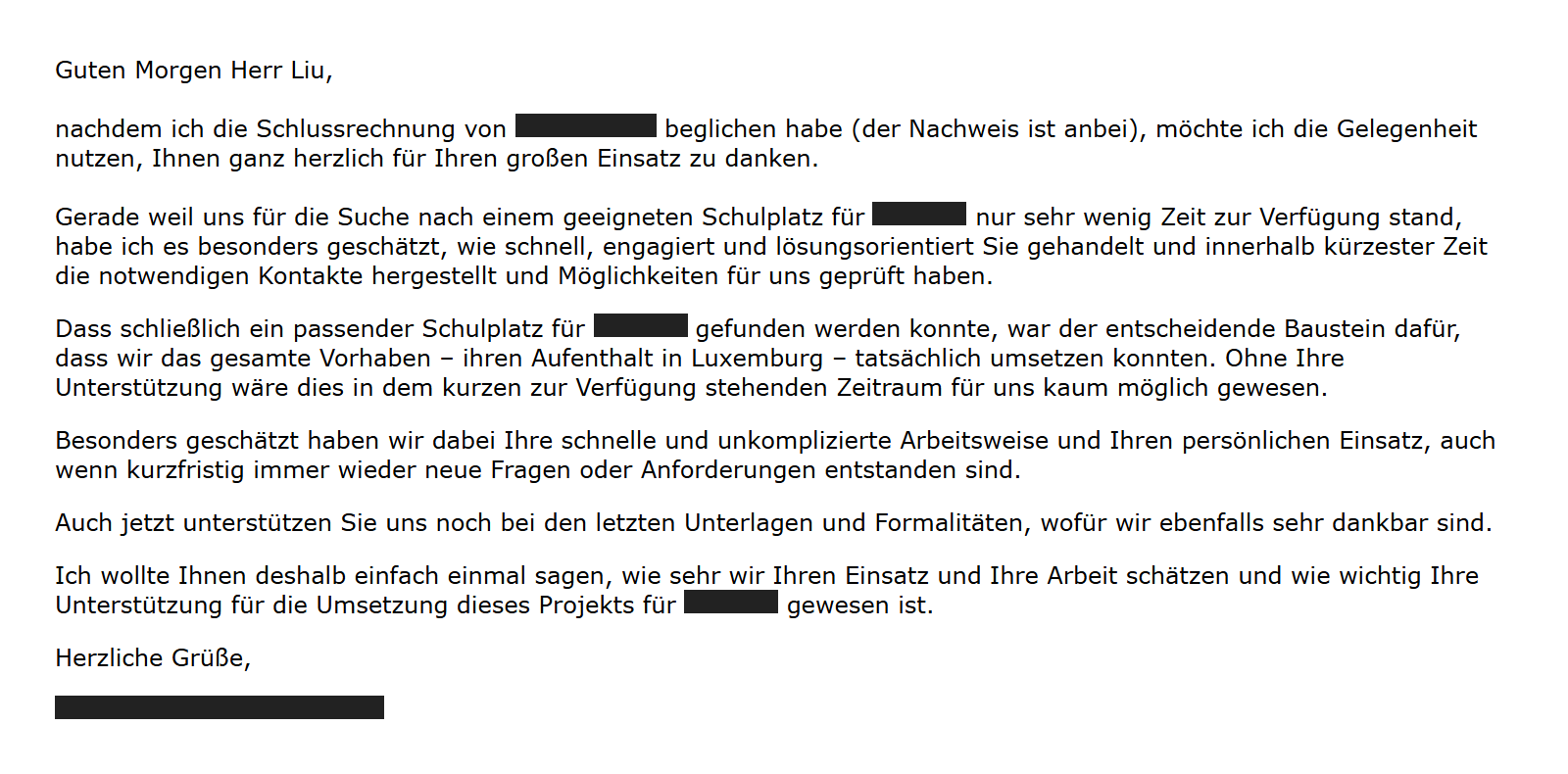
We handled one exceptional placement in which nine days passed between the family’s paid engagement and the child’s school start. This was a case within the EU, not a nine-day timetable for an application and visa from China.
We connected school discussions, the trial, the admission assessment and host-family arrangements. The parents had already found the host family through their own contacts; LEP helped clarify responsibilities and documents with the school and accompanied the local discussions.
I pressed for an offer quickly. The school nevertheless insisted on teachers’ feedback and a collective assessment. Urgency did not mean accepting an unsuitable pupil. At the same time, staff took seriously the fact that term had begun and the child had no school to attend.
That combination is why I value our relationship with St George’s: standards and procedures remained in place, alongside a genuine concern for the student. LEP’s contribution was sustained coordination and practical work on the ground.
Do not use an exceptional case as your own timetable
The nine-day case deserves recording because it was unusual. Most families should leave ample time, especially when the child is still overseas and a host family has not been agreed.
Tell LEP where the child currently lives, the curriculum and year, and the intended start. We can assess whether entry is possible now and coordinate the school, accommodation and next steps.
Discuss your child’s plans with LEP
Tell us the current year and curriculum, English level, intended start and whether parents will move too. Based in Luxembourg, LEP coordinates school applications, host-family arrangements and the transition into school.