
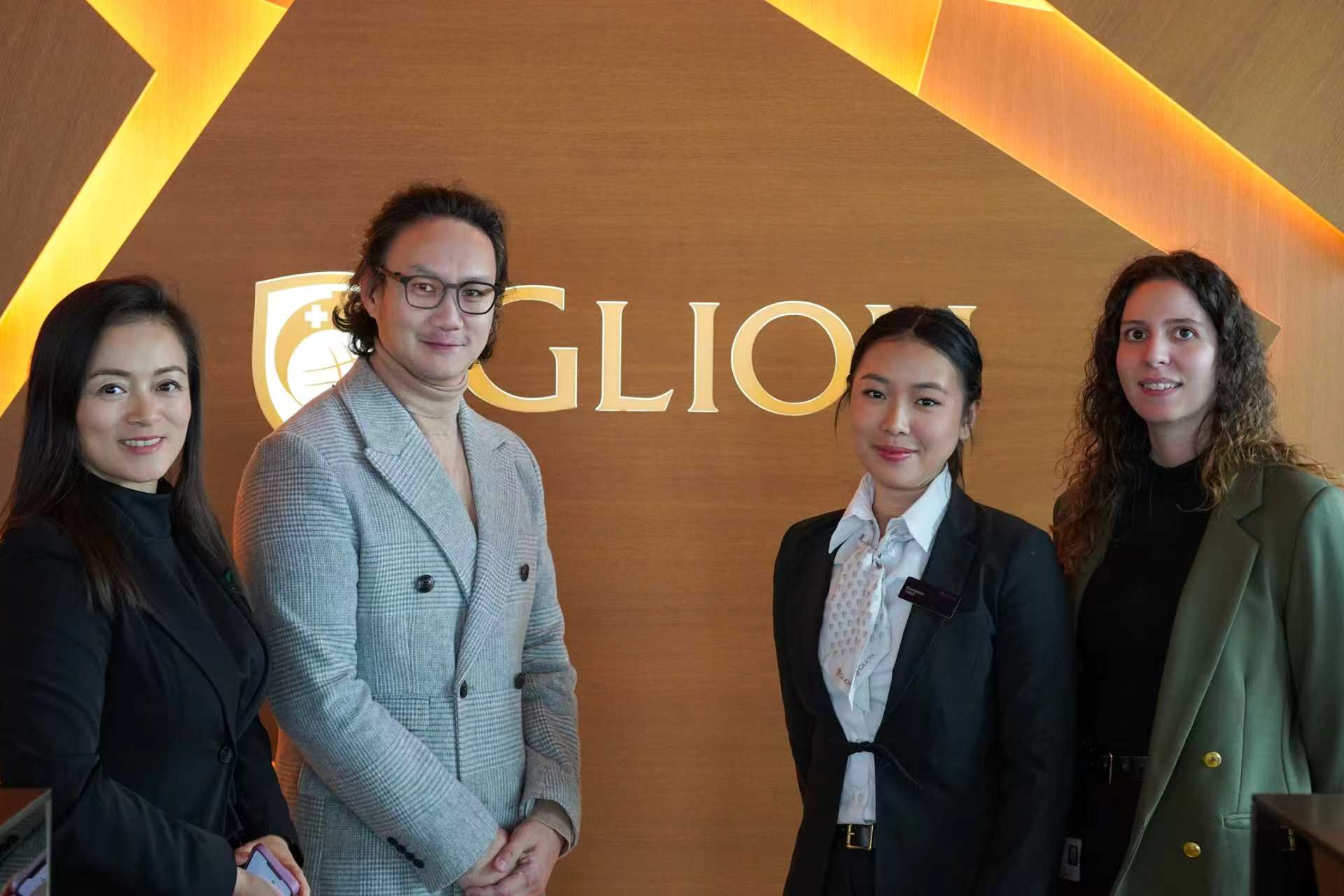
In October 2026, I visited both Swiss campuses of Glion Institute of Higher Education. Like Les Roches, Glion belongs to Sommet Education. The school contacted us on WhatsApp the day before, arranged discussions with academic and internship leaders and showed us both campuses. The preparation was professional and thorough.
Glion above Montreux: scenery, dining and accommodation
At the Glion campus, the restaurant looks towards Lake Geneva and the Alps. The views were beautiful. We enjoyed roast duck at lunch, as well as good desserts. The meal made a very positive impression.
The accommodation also looked good, with dedicated student activity space. When advising a family through LEP, I consider the course alongside the room, dining and the way a student can spend an ordinary day. Glion’s overall environment felt established and carefully presented.
Bulle: a different, more academic atmosphere
We then visited Bulle, which also felt substantial in scale, with more of a university and business-school atmosphere. Bulle is in a different town, and the two campuses serve different stages of study. The school describes Bulle as its main academic centre.
Seeing both helps explain how service practice connects with subsequent business learning. LEP places teaching location, accommodation, practical periods and budget on the same plan.
Can students choose between mountain and town life?
Our student conversations touched on different preferences: some enjoy Glion’s mountain scenery, while others prefer life in Bulle. I think it is valuable for applicants to experience this difference themselves.
The actual campus arrangement depends on programme and study stage. The 2027 Swiss hospitality-business fee schedule separates the experiential stage at Glion from subsequent academic stages at Bulle. LEP communicates the student’s preference and asks which choices or changes are available for that route.
What a student told us about practical learning
A student who hosted us said they had compared other hospitality schools and particularly valued Glion’s practical curriculum and connection with frontline work. This is direct student feedback that I think families should hear.
I would then ask how a young person develops from carrying out a task to understanding it: serving guests, coordinating colleagues and organising a process, followed by managing an enterprise. LEP relates the student’s interests to the programme’s actual practical work.
Reception details reveal how people work
Our hosts were professional, courteous and warm. Academic and internship questions had appropriate people to answer them, and the itinerary was well organised.
Having run businesses for years, I pay attention to preparation, responsiveness and follow-through. These matter in hospitality and service education. The visit is one part of my assessment, considered alongside the curriculum, academic expectations and placements.
The early stage involves substantial campus-based service, food and beverage and hotel-operations practice. Company internships follow as students develop more complex responsibilities. During our discussions about Chinese students, the school described support for required internships, including destinations in Europe and the Middle East, while acknowledging the difficulty those graduates face in remaining in Switzerland for employment. LEP plans around the individual’s goals, languages and work eligibility.
Hospitality business or luxury business?
| Route | Focus | Interests to discuss with LEP |
|---|---|---|
| International Hospitality Business | Service operations, business management and customer experience | Teams, running a business and working with guests |
| Luxury Business | Branding, marketing, finance, supply and distribution in luxury | How brands create value and serve customers |
I ask a student to describe the tasks they would enjoy: organising an experience, coordinating a team or analysing a brand’s pricing and customer development. This tells us more about motivation than simply liking luxury products.
The full “1 + 3” route and entry assessment
The current undergraduate route describes an Experiential Year followed by three BSc years, with two internships and a period of professional practice. Location, time on campus and placement periods should be considered together.
The published minimum age is 17.5. School-leaving qualifications, relevant vocational education and work experience influence entry into the experiential stage or direct entry to the BSc. Published English requirements include IELTS 5.5 overall, with at least 5.0 in each component. LEP reviews the applicant’s transcript and experience with the school to establish the appropriate starting point and language preparation.
The 2027 fee schedule: what CHF 232,175 covers
For the complete route in the Swiss undergraduate schedule, the listed items add up as follows. Housing in later periods and personal expenditure still need to be budgeted separately.
| Listed item | Full-route amount (CHF) |
|---|---|
| Tuition | 176,500 |
| Academic resources and services | 13,600 |
| Health and accident insurance | 6,800 |
| Meal credit | 16,100 |
| Listed twin-room accommodation | 18,900 |
| Application fee | 275 |
| Total of these items | 232,175 |
A refundable damage deposit of CHF 1,250 is a separate cash requirement. The schedule prices accommodation for only some on-campus semesters. Later off-campus or placement housing, additional meal credit, transport, personal spending and room upgrades depend on the route. LEP prepares a semester-by-semester budget so families can understand payment dates and the full commitment.
When does the larger budget make sense?
I would explore Glion closely when a student has a sustained interest in service business or luxury, is willing to invest in English, communication and practical learning, and has a family able to support the full route. LEP helps students still exploring their direction understand the real coursework and tasks before committing.
For those aiming to work in Europe, the intended occupation, country, local language and work eligibility belong in the plan from the application stage.
What can internship earnings contribute to the net cost?
Glion’s hospitality-business bachelor includes two internships and a further period of professional practice, supported by its careers team. During our visit, the school also told us that required internship opportunities would be provided. LEP checks arrangements, destinations, pay and living benefits for the student’s route and budgets earnings from the contract.
For curricular placements covered by Article 11 of Switzerland’s hospitality CCNT/L-GAV agreement, the published 2027 minimum is CHF2,404 gross per month, applicable from 1 January or the summer season for the relevant establishment. At that fixed planning rate, six full paid months yield CHF14,424 in base wages and twelve yield CHF28,848. Rates are checked again for the actual placement year; placements elsewhere use local contracts and benefits.
The following illustration assumes CHF1,800 per month in combined payroll deductions, placement accommodation, meals, insurance, transport and other placement costs. This is an adjustable planning input; LEP replaces it with the employer’s terms and actual living arrangements.
| Full paid months | Gross base earnings | Illustrative costs and deductions | Balance available for other education costs |
|---|---|---|---|
| 6 months | CHF14,424 | CHF10,800 | CHF3,624 |
| 12 months | CHF28,848 | CHF21,600 | CHF7,248 |
At CHF1,500 in monthly costs and deductions, the twelve-month balance is CHF10,848; at CHF2,100 it is CHF3,648. A pro-rata thirteenth salary is added where applicable; this table counts base wages only. Living or insurance costs already deducted through payroll are not added again.
Net family cost = school charges + other uncovered costs − remaining internship earnings − confirmed discounts or scholarships. The internship balance already deducts placement-period costs.
If the two internships yield 12 paid months at this rate, with the illustrative CHF1,800 monthly costs and deductions, CHF232,175 less CHF7,248 becomes CHF224,927 plus later housing and other costs not included, less confirmed scholarships. The CHF1,250 deposit is separate; earnings from further professional practice are added from its actual contract.
Tuition and deposits usually fall due before wages arrive month by month. LEP therefore sets out both the cash required before enrolment and the projected net cost at the end of the route.
Internship and wage check: 26 October 2026. Wage basis: CCNT / L-GAV Art. 11 · Art. 12 · Art. 13.
Apply to Glion and arrange a visit through LEP
LEP compares hospitality and luxury business routes, assesses the entry point with the school, and discusses campus arrangements, internships and semester budgets. Having visited Glion and Bulle, we can book family visits and prepare questions about courses, rooms and student life.
LEP provides school-fit assessment, school liaison, application assistance and family campus-visit bookings. Schools pay for this application support; students and parents pay no LEP service fee for it.
Please share your education, English level, interests, intended intake and budget. WhatsApp · contact@luxedupartners.lu. Meet James Liu and learn about LEP’s European local support →
Sources and visit evidence: Glion undergraduate programme and admission pages, 2027 Swiss undergraduate fee schedule, Swiss campus and careers information; James Liu’s visits to Glion and Bulle, dining and accommodation observations, and academic and careers discussions. Checked and updated on 25 October 2026. First-hand observations: James Liu’s October 2026 Swiss school visits.